
Fantasy Football Deep Dive Into Positional Depth: Draft Plan Focused On Mid-Round Quarterbacks
John Laghezza does a fantasy football deep dive into the data to concoct the optimal draft strategy.
So excited to see Fantasy Life’s bossman back in the same fantasy streets that he built. As I dug through Matthew Berry’s 2026 Draft Day Manifesto, it dawned on me—man, this is pretty good stuff. It also challenged the question, do I follow this template for success, and how could I expand on it selfishly for myself? (oh, and you too, of course)
Today, we’re quickly tying together all the time-tested habits of a winning fantasy player, with extra emphasis on habit #2—identifying relative depth at every position.
If you’re reading my work, it’s safe to assume you’re putting the work in. The calendar just turned to August and you’re knee deep in fantasy visualizations. Count the due diligence box as checked.
Skipping ahead a touch, I want to highlight habits #3 and #4 as a function of #2. In the manifesto, Berry said, “at a fundamental level, fantasy football is entirely about managing risk and giving yourself the best odds to win on a weekly basis” and that the best players “use rankings flexibly and in context.” Couldn’t agree more. Let’s put it to the test.
To me, the absolute skeleton key to marrying these core philosophies together rests with the aforementioned habit #2: commanding relative positional depth. Mastering the middle to backend of the player pool won’t just yield fun names for a sleeper column—it could and should shape all earlier decisions through the lens of supply and demand.
That brings us to you guessed it … charts! Yay!
Kidding aside, it’s always easier to convey and digest information visually. Using recent high-stakes fantasy football ADP data, I plotted each position to better accentuate where voids exist in hopes of blending them all into the perfect roster. Here goes nothing

Join Our Newsletter
Trusted by 400,000+ fantasy football players. Get access to Fantasy Life's free award winning newsletter and tools, all in one step.
By registering or logging in, you agree to our Terms of Use and Privacy Policy.
Identifying Advantages In Positional Depth For Fantasy Football 2026
Whether to Invest in High-End Quarterbacks
QUARTERBACK ADP DISTRIBUTION
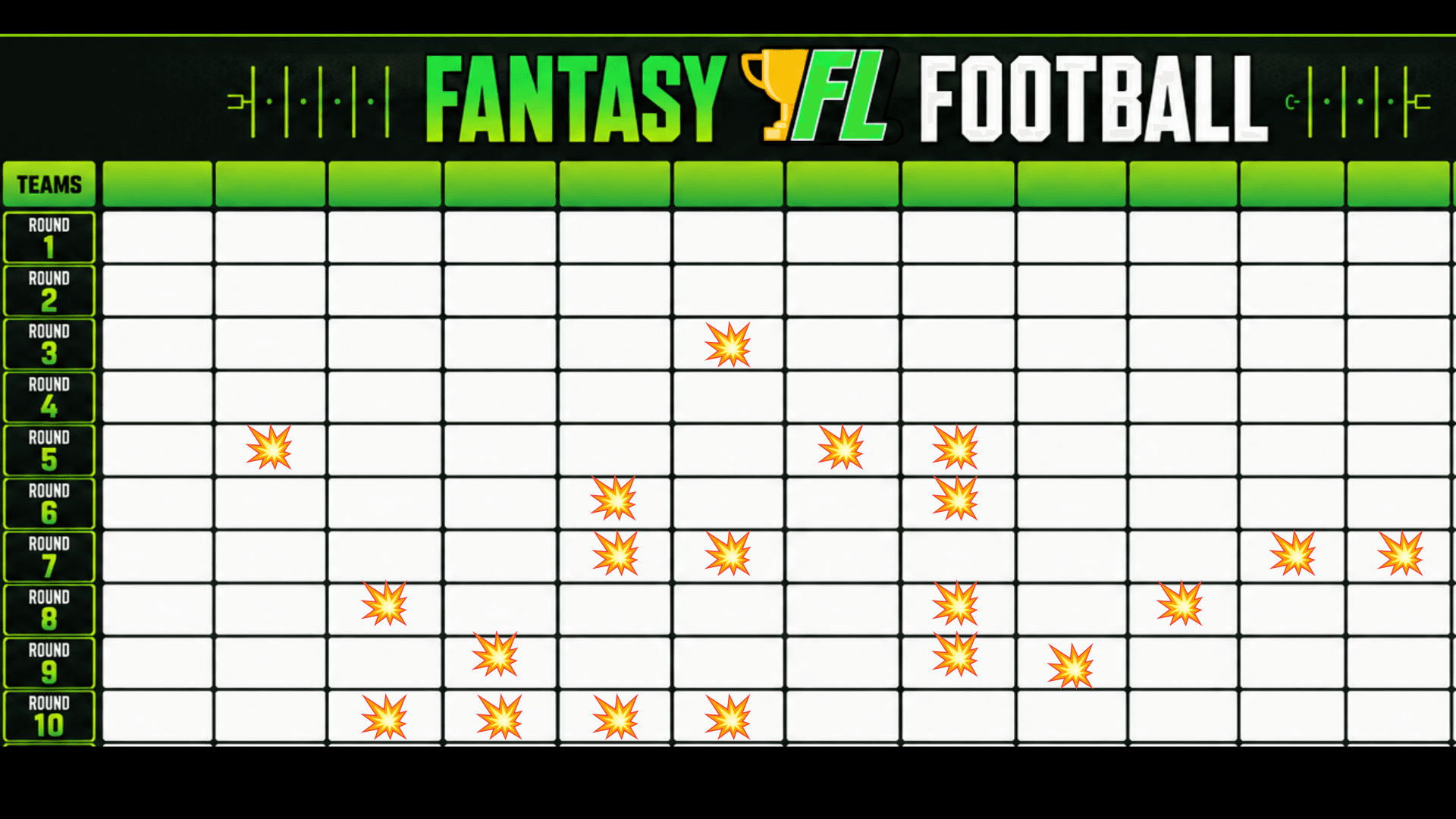
Quarterback is mostly consolidated inside rounds 5-8 in the fantasy football rankings for the vast majority of starters, outside of Josh Allen, of course. He’s pretty easy to identify on an otherwise anonymous chart—the cheese that stands alone in round 3.
And therein lies the rub, creating the ultimate conundrum for fantasy gamers ...
Why don’t we want the best player in the game, especially in the third round?
I mean, it’s not like it costs you a top-20 pick. Answer is pretty simple. There’s just not enough separation from the field to justify such a wide disparity in price. Sure, Allen’s the No. 1 scoring fantasy QB per game over the last three seasons (21.0)—but Lamar Jackson (21.1) and Jalen Hurts (20.2) continue nipping at his heels at a significantly lower price. Plus, we may see Drake Maye enter the conversation if his positive trajectory continues.
Whether or not any other QB can catch Josh Allen this time around remains the question at hand. And as much as I stand in awe watching Allen operate every Sunday, my answer’s still a definitive yes. Remember, just last year Lamar was blowing the doors off Allen’s production across the board before he got hurt, scoring a ridiculous +27 FPG. Crazy stuff.
Now fully healthy with wunderkind OC Declan Doyle at the switch, who’s to say Jackson doesn’t reassume peak power? That’s the rub right there—if there’s even one QB who can keep pace (let alone Jayden Daniels, Hurts or even Justin Herbert), the value calculation and opportunity cost of Allen in the third gets completely out of whack.
Speaking of Herbert, he’s going off boards in the seventh round as the QB9 with an extremely strong case to make a run at Allen as well. Another year under Jim Harbaugh with Mike McDaniel creating space and a fully rejuvenated O-line could push last year’s 17.8 FPG over the 20-mark easily. Every data point makes it more difficult to pay the iron price at QB.
Matthew Berry's Draft Day Manifesto
Running Back Goes Front and Center
RUNNING BACK ADP DISTRIBUTION
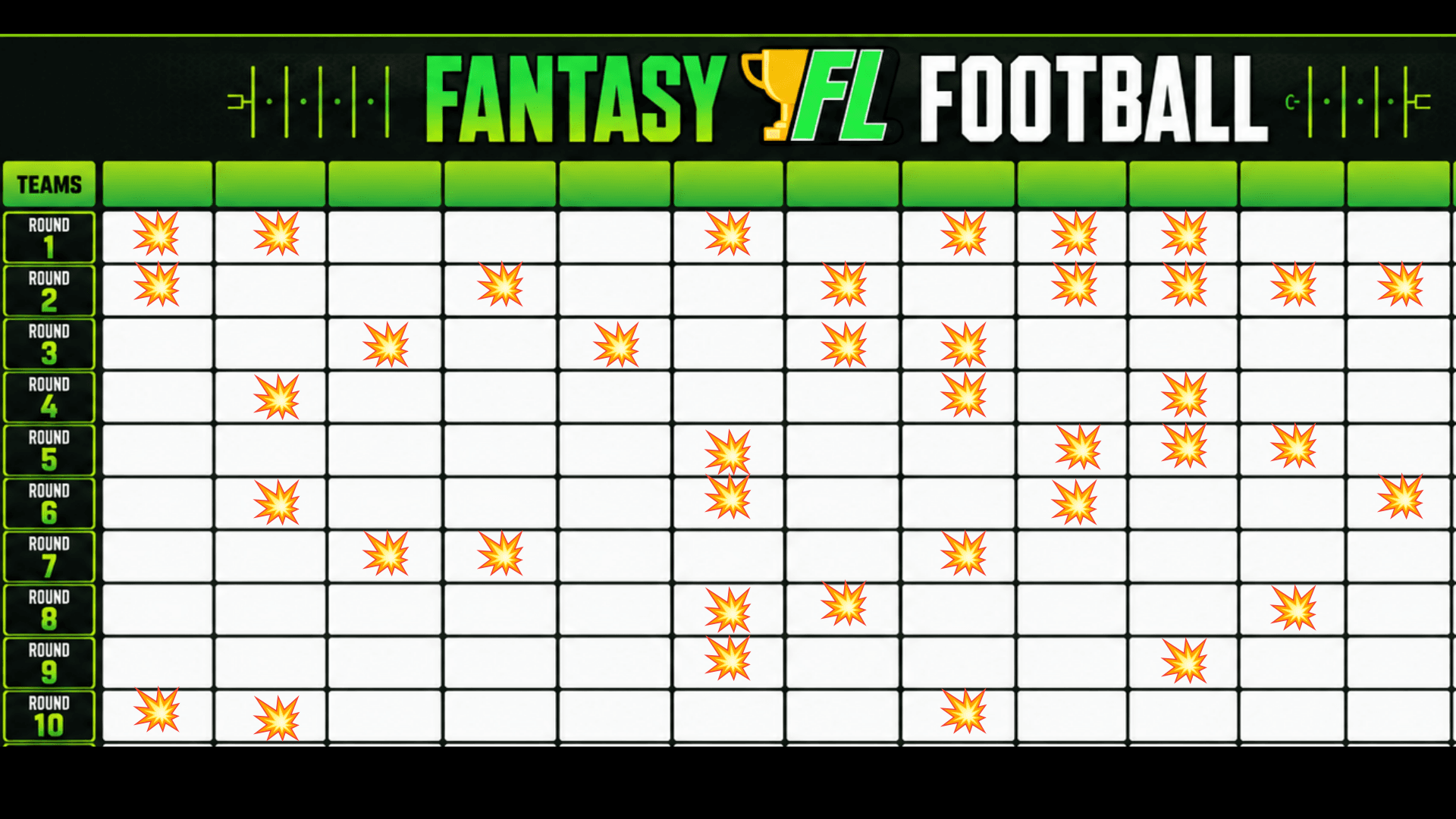
No better term describes the 2026 fantasy RB landscape than “front-loaded,” which Merriam-Webster’s Dictionary defines as assigning costs or benefits to the early stages (such as a contract, project or time period). Bingo … score one for the wordsmiths.
When you’re old, trends are no longer new, instead part of a larger ongoing cycle. Much ado’s been made this summer over our trip into the fantasy time machine, back to the days of a first round chock-full of ballcarriers. Honestly, I can’t remember the last time we saw 13 RBs in the first 20 picks. And while I’ve built a brand on bucking the system, sometimes the trend’s our friend.
With a couple hundred hand drafts already under my oversized belt to compare, my favorite teams always start with at least one RB in the first three rounds. Won’t go so far as to say you can’t win without one, but it forces you back into the market earlier at a true premium. That’s where overpaying comes into play, the fastest path to destruction.
(If you’re interested in my takes regarding that clump of runners between picks 13-20, check out the Great Second Round RB Debate — there’s a visualization and breakdown here)
The RB tier drop is visually obvious, but also quantifiable—meaning there’s a reason for the 14-pick section of the draft between the 4th and 5th with only a single tailback going off boards (Travis Etienne). It’s a buyer’s market with everyone swarming like sharks around the best options. Momentum builds, and FOMO sets in until all of a sudden you’re paying a fourth-round freight for David Montgomery.
By the time we reach pick 41, around 20 RBs have already been snatched up, leaving a few interesting names—but ones with uncomfortable warts for a Week 1 fantasy RB1. As a massive Jaguars bull, I’m telling myself a story that Bhayshul Tuten could and should be going in that group. Yet even then, I fully understand the downside risk of waiting so long on a front-loaded position.
Miss on these risky swings and you’ll be playing catchup all year right out of the gate. Not the road I want to take. It’s one thing needing to improve one RB position— t happens. But two? You’re in trouble.

Mid-Round Strength at Wide Receiver
WIDE RECEIVER ADP DISTRIBUTION
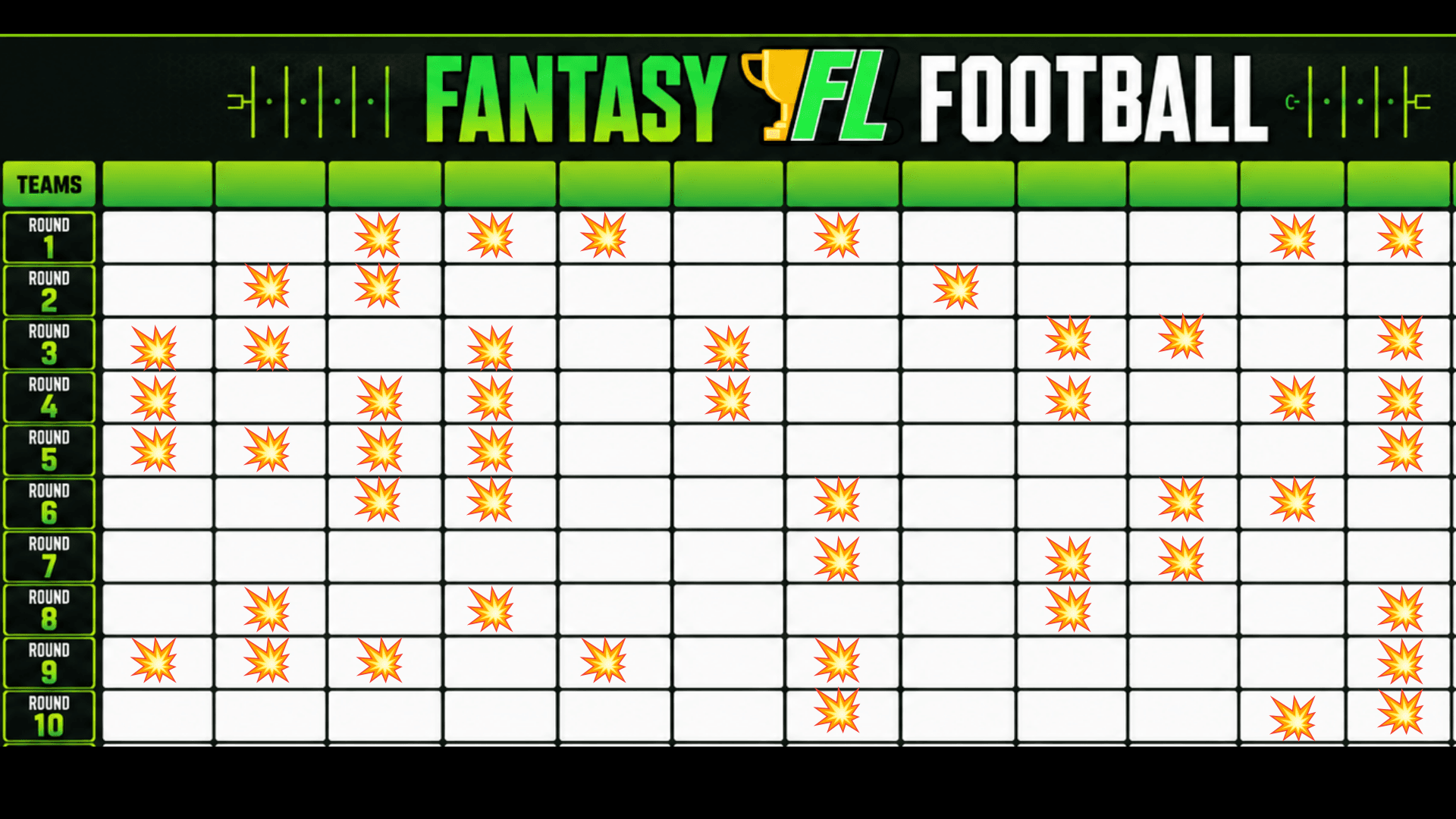
Knowing what we already learned about QB + RB pricing above, my first instinct is screaming—WR ADP being this evenly spread out is a match made in heaven for fantasy team-building. It’s all about the pieces interlocking in harmony. Don’t you just love it when a plan comes together?
Wherever you decide to enter the WR market, there’s a fair value right there waiting for you. Personally, I find myself enamored with the glut of high-end pass catchers going anywhere around picks 36-60.
If anything, there’s too many quality players to choose from, between Tetairoa McMillan, Garrett Wilson, Jaylen Waddle, Terry McLaurin, Luther Burden, Mike Evans, Davante Adams, Jameson Williams, DJ Moore, Christian Watson, Rome Odunze or Brian Thomas. Each and every one of these players stand a chance at a WR1 finish, which is all we're ever seeking as fantasy GMs. Not a bad set of options considering we waited to start smashing the draft button.
How are we supposed to decide which WR to draft? Answer’s easy if you ask me … don’t. Use position density to dictate allotment across your entire roster, and snatch the cheapest remaining piece off your ranks wherever they fall.
Matthew Berry's Fantasy Football Rankings
Mind The Gap at Tight End
TIGHT END ADP DISTRIBUTION
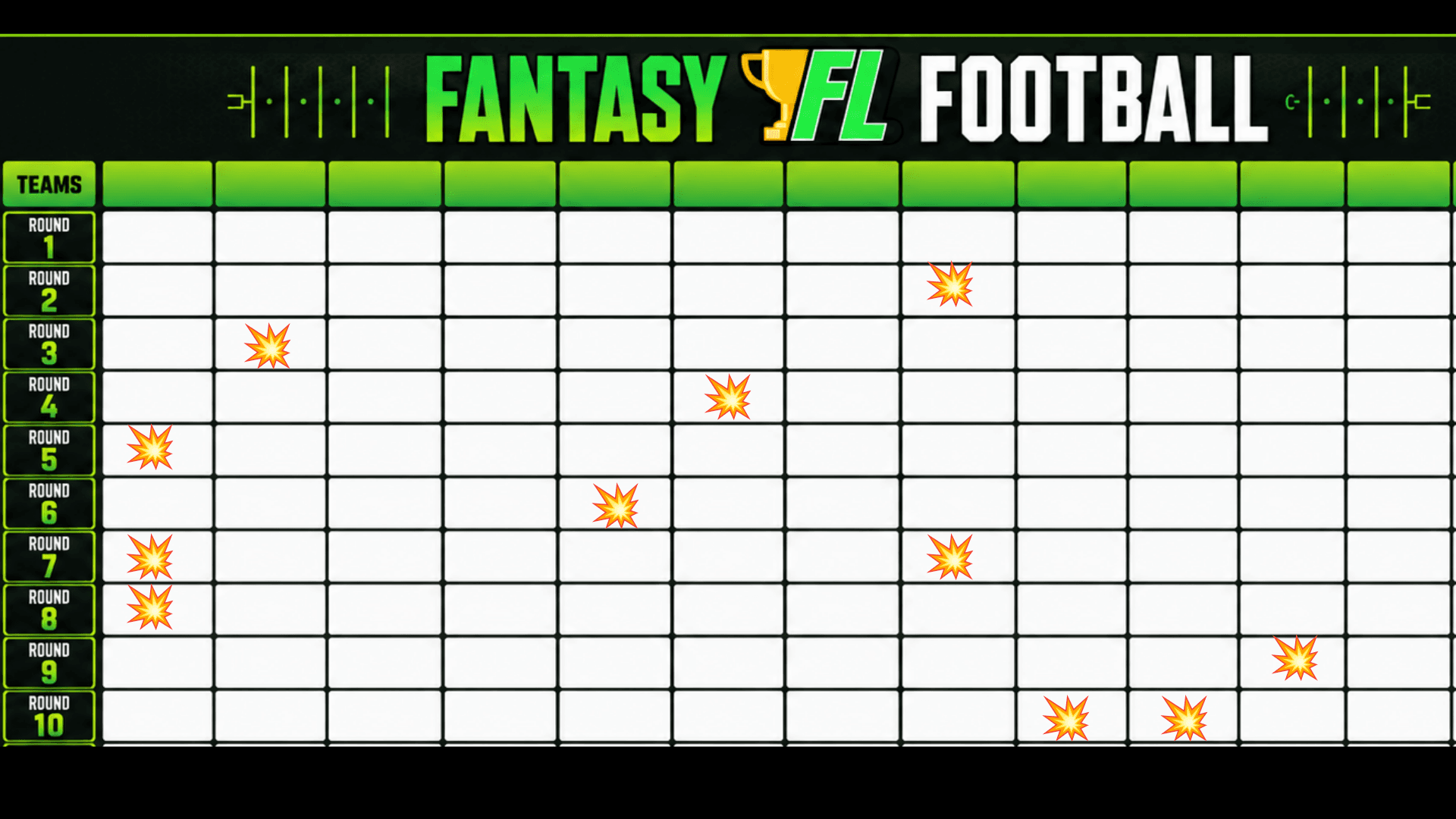
Not as voluminous as WRs due to the sheer nature of the position, TEs do take on a similarly balanced layout. Simply put, wherever you find a gap in your projections compared to ADP for the other positions, grab your TE.
Unsatisfied with second-round RBs? Grab Brock Bowers. Third-round WRs got you down? Say hello to Trey McBride. Fourth-round QB feeling kinda pricey? Scoop up Colston Loveland. The same song plays out all the way down the draft board.
My personal favorite is Loveland, the porridge that’s just right. This guy’s built differently. Plus, I worry there’s not enough of a scoring gap from the field to justify Bowers’ cost, precisely because of someone like Loveland. Remember, Travis Kelce paid off first-round dividends not solely due to raw scores, so much as the disparity in FPG from the field.
Either find a difference maker or punt the position. Don’t settle. Let me plant one flag real quick before descending into tight end agnosticism. If we experience continuation in the Bears’ offense in-line with those four games to finish the regular season into the playoffs, Loveland’s going to be that needle-mover.
From Week 17 on, the rookie tight end put up an absurd combination of utilization (11.5 targets/game, 33.3% target/route, 78.8% WOPR) and efficiency stats (2.68 yards/route, 13.0% 1stDn/route, 25.0% explosive catch rate). Not to mention he’s the first-ever pick of supergenius Ben Johnson’s HC career, with all the positive camp quotes to boot. This marriage is no accident, and it’s glorious.
With that, there’s only one Colston Loveland and sometimes we miss on our targets. When that happens (sigh), I’m dropping all the way back to pick 125 for Dalton Kincaid or Isaiah Likely—i.e. guys who can shake a tackle in the secondary and act as a second pass-catching option. Check and check.
CONCLUSION: The Ultimate Fantasy Football Draft Plan
OK, now put it together and what do you got? No, not Bibbidi-Bobbidi-Boo. To me, it’s what very clearly seems like the perfect setup for a team destined to dominate.
Starting at the top, the broader market is making it loud and clear—wait on your starting QB, and I can’t disagree. The fact players with rushing floors like Brock Purdy, Jaxson Dart, or even Tyler Shough remain available after everyone’s already selected a QB offers too juicy an opportunity cost to pass up.
Similarly priced skill-position players represent either backup RBs or 3rd/4th options in the pass game. No, thanks. The age of the late-round quarterback has returned.
Early RBs may be all the rage, but the bottom line is you’re not a follower when the math checks out. And yes, sometimes there is such a thing as the wisdom of the crowd. It’s up to the drafter how to delineate the particular balance of their team. Nevertheless, considering the consolidation of desirable backfields into the top 25 overall, I’m not leaving the opening three rounds with less than one RB. The rest of the draft feels like playing from behind.
Give me Jahmyr Gibbs or Bijan Robinson with the first two picks, then some combination of Ashton Jeanty, Kenneth Walker, James Cook or Chase Brown to otherwise start my squad.
That lovely clump of wide receivers mentioned above slots right into our draft plan after the running backs, offering a lovely start at the skill positions. I’ll take the Loveland detour in the fourth, but if not, sign me up for Jaylen Waddle or Christian Watson every time. And when I manage to grab Loveland? I’ll draft Parker Washington or Makai Lemon on the wraparound seven days a week.
All about knowing the lay of the land without overpaying—the main result of not fully understanding positional depth. At this stage, we’ve theoretically drafted some combination of six flex players just in time to tap Justin Herbert or Brock Purdy from the QB well before it runs dry.
With all your starters set, the path forward is entirely up to you now. Choose your own adventure from there, with the freedom to take all the upside stabs you’d like since the entire foundation is set in stone. Good luck!

Unlock Our Tools!
Stop hitting the paywall. FL+ gives you access to our premium in-depth content, expert rankings & projections, mock draft simulator, and all the tools you need – all personalized to your league.
Players Mentioned in this Article
Presented by

 JoshAllenQBBUF
- PPG
- 29.3
- Proj
- 23.1
 JaxsonDartQBNYG
- PPG
- 5.5
 JaylenWaddleWRDEN
 TetairoaMcMillanWRCAR
Published Updated