The History Of Fantasy Football RBs After A Massive-Touch Season And How To Approach Them In Your Drafts
Ian Hartitz breaks down the history of running back production after massive-touch seasons and what the impact on fantasy football is.
One of the biggest annual storylines in fantasy football: Should you really trust Player X to stay healthy and be as good as they were last season, coming off such a big workload?
There have been studies by learned fantasy football scholars over the years indicating that 370 touches is the breaking point for RBs. Playoff touches will sometimes be included, depending on whatever biased agenda the author is attempting to push.

Join Our Newsletter
Trusted by 400,000+ fantasy football players. Get access to Fantasy Life's free award winning newsletter and tools, all in one step.
By registering or logging in, you agree to our Terms of Use and Privacy Policy.
Evaluating RBs In Fantasy Football After Massive-Touch Seasons
On the one hand, I clearly despise the idea that an arbitrary number is the difference between an RB being fine vs. screwed for next season. By this logic, Bijan Robinson's 365 and 366 touches over the past two seasons make him good to go, and Jonathan Taylor (369 touches in 2025) is also safe! Nothing to see here!
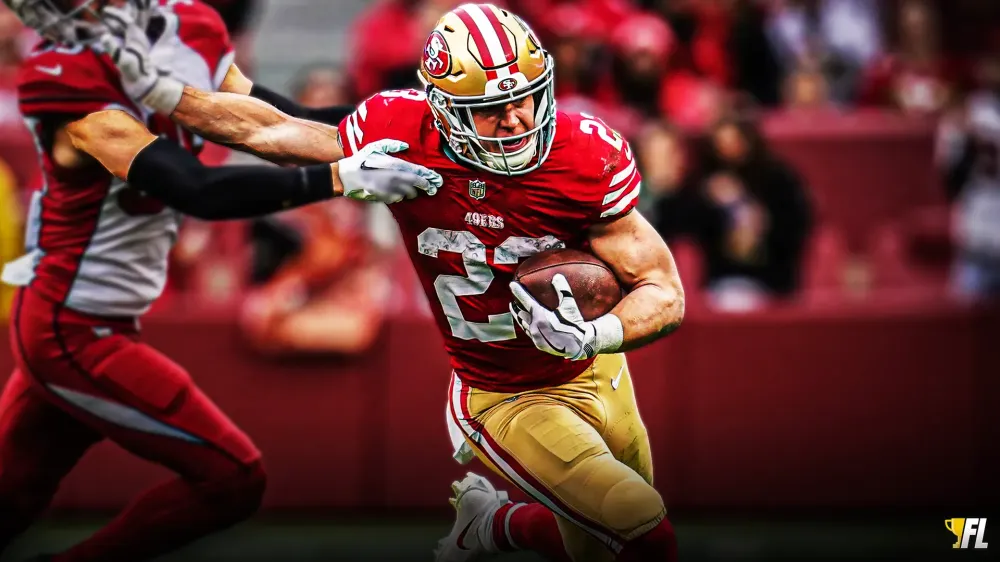
On the other hand, I do have eyes, and Saquon Barkley didn't seem to carry the same juice in 2025 following his monstrous 2024 workload (482 touches, including postseason). It also just intuitively makes sense that a ridiculous number of touches takes something away from these alleged human beings.
To try and get a better feel for whether RBs do indeed tend to crash out following a high-usage season, I looked at the 30 instances of an RB getting 350-plus touches in a single season (including playoffs) from 2015-2024 and what they managed to achieve in their following campaign. Still an arbitrary number, but at least we have a larger and more recent sample size that takes place in the last decade. Call me crazy, but I'm not sure if Eric Dickerson's numbers from the 1980s are overly relevant in the year 2026.
The results (you can see a full chart here):
- Only 4 of 30 (13.3%) high-touch backs exceeded their previous season's average PPR points per game.
- Not ideal, although this still produced 16.6 PPR points per game (pretty solid average (RB14.7) and median (RB12) position ranks. For reference, last season Chase Brown averaged 16.6 PPR points per game and finished as the RB7.
- Average yards per carry went from 4.7 to 4.1 (-0.6).
- Average games played the next season AFTER having 350-plus touches: 13.3. The median was 16 (including playoffs).
- It's tough to say age or career touch count is too much of an issue in terms of predicting near-term health, as 12 of the last 13 qualifiers (sorry CMC) played at least 13 games the next season.
It's tempting to hang our hat on that first bullet and conclude that a 13.3% hit rate of improvement isn't worth investing in. No running back has repeated as fantasy's overall PPR RB1 since Priest Holmes back in 2002-03 after all. Why not just fade Christian McCaffrey?
But yet, I can't do it.
Big workload numbers are probably something we address on a case-by-case basis, instead of trying to find a definitive rule of thumb. Does David Johnson's dislocation of his wrist in Week 1 of 2017 really mean we shouldn't draft CMC in 2026?
What's actually worse: McCaffrey entering 2026 coming off 450 touches, or him entering 2025 coming off a season that was derailed by severe Achilles and PCL injuries?
How Age Factors Into Drafting or Fading Fantasy Football Running Backs
The other factor here is, of course, age. Father Time comes for us all, and elderly running backs indeed haven't put up big numbers into their 30s over the years.
But even those overwhelming numbers are at least a little bit shoddy when considering the respective sample sizes involved. Per OurLads active rosters, there are currently 30 age-24 running backs in the NFL–and just four 29-year-olds (Saquon, CMC, Tony Pollard … and Velus Jones as of today! Happy birthday to Bears legend Velus Jones!). So when we see 29-year-old RBs accounting for 3% of the position's top fantasy finishes over the years while only making up 2.3% of the NFL's current RB population … it's actually kind of impressive! Not a reason to actively target older running backs (not today, satan/survivorship bias), but another example that simply fading any fantasy asset based on one single variable probably isn't the best idea.
Having a super provocative one-size-fits-all rule for running backs coming off big-touch seasons would certainly get the people going, but I'm sorry everyone: We'll have to be more nuanced and do things like grind fantasy football projections, keep up with news and evolving depth charts, and perform occasional spiritually-guided dance rituals to the fantasy gods in the hopes of the football bouncing our fantasy team's way come September.
Join Our Newsletter
Trusted by 400,000+ fantasy football players. Get access to Fantasy Life's free award winning newsletter and tools, all in one step.
By registering or logging in, you agree to our Terms of Use and Privacy Policy.
Players Mentioned in this Article
Presented by



Published